

Across Canberra, construction projects are shaped by unique conditions—sloping blocks, tight suburban streets, and a mix of modern and established neighbourhoods. Whether you’re building a new home in Gungahlin, extending a property in Woden, or managing a small commercial site in Belconnen, getting concrete to the right place efficiently is a key part of the process.
That’s where concrete pumping Canberra services come into play. Instead of relying on manual labour or traditional pouring methods, pumping allows concrete to be delivered quickly, accurately, and with minimal disruption.
For homeowners and builders alike, understanding how concrete pump hire Canberra works can make planning easier, reduce delays, and help avoid costly mistakes.
Why Concrete Pumping Is Commonly Used in Canberra
The reason why concrete pumping has become the norm in the ACT is because the practice fits well in the local environment.
Challenging Block Layouts
A large number of Canberra suburbs include:
- Sloped or uneven terrain
- Narrow driveways
- Limited side access
Conventional solutions, such as wheelbarrows, cannot be used in such a case.
Modern Residential Builds
New developments usually entail:
- Large slab areas
- Multi-level homes
- Stringent construction schedules
Pumping helps with the uniformity of flow and location particularly where precision is required.
Productivity at Business Locations
Time is essential in the case of commercial and civil work. Pumping helps:
- Reduce labour requirements
- Speed up pours
- Enhance general coordination of the sites
That is why the pumping services of concrete Canberra are popular among the small and large-scale construction projects.
Typical Residential and Construction Scenarios
Some of the projects undertaken in Canberra that involve the use of concrete pumping are:
Residential Projects
- House slabs and foundations
- Driveways and pathways
- Garage floors
- Backyard patios and pools
Commercial and Civil Work
- Warehouse flooring
- Footings and structural elements
- Car parks
- Retaining walls
In most of such instances, pumping becomes not only convenient, but also a requirement due to restrictions of access.
The Process of Concrete Pumping (Step by Step)
Such knowledge of the process is what will enable you to plan and prevent surprises during the day of the pour.
Step 1: Site Assessment
The contractor in the pre-job assessment considers:
- Access points
- Proximity between truck and pour location
- Height or reach stipulations
- Equipment ground stability
This is a step that defines the kind of pump that is needed.
Step 2: Equipment Setup
A line or boom pump is placed depending on the position:
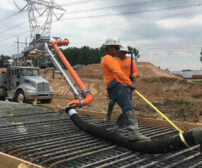
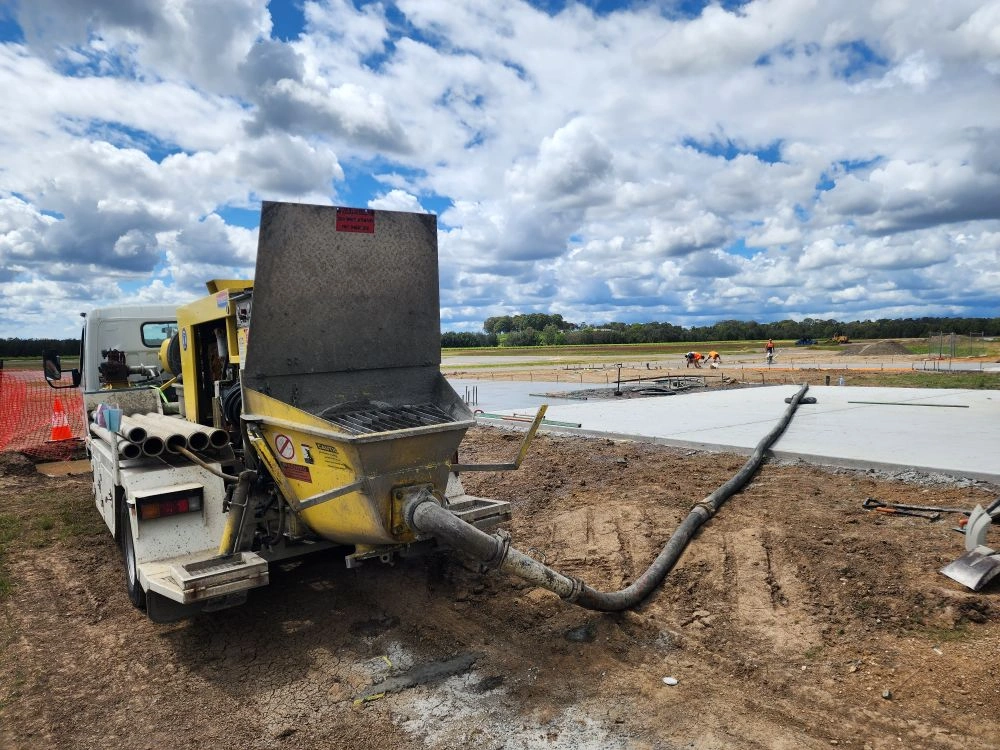
- The line pumps are laid on the ground and a hose is directed towards the pouring area
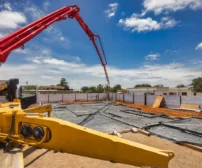
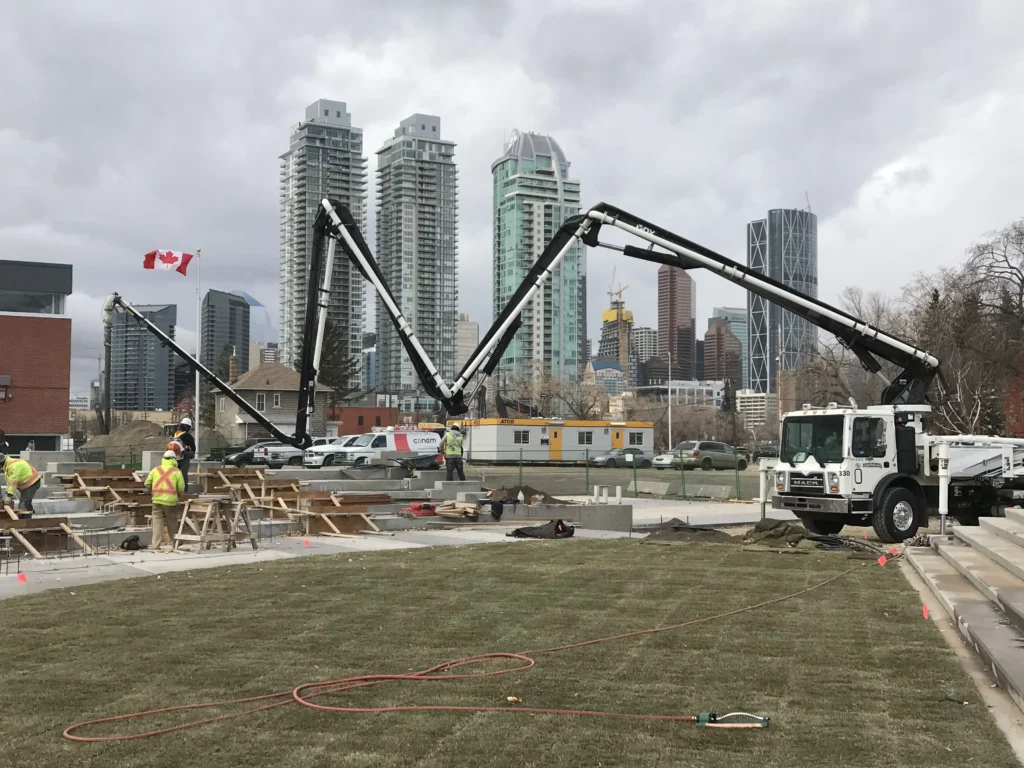
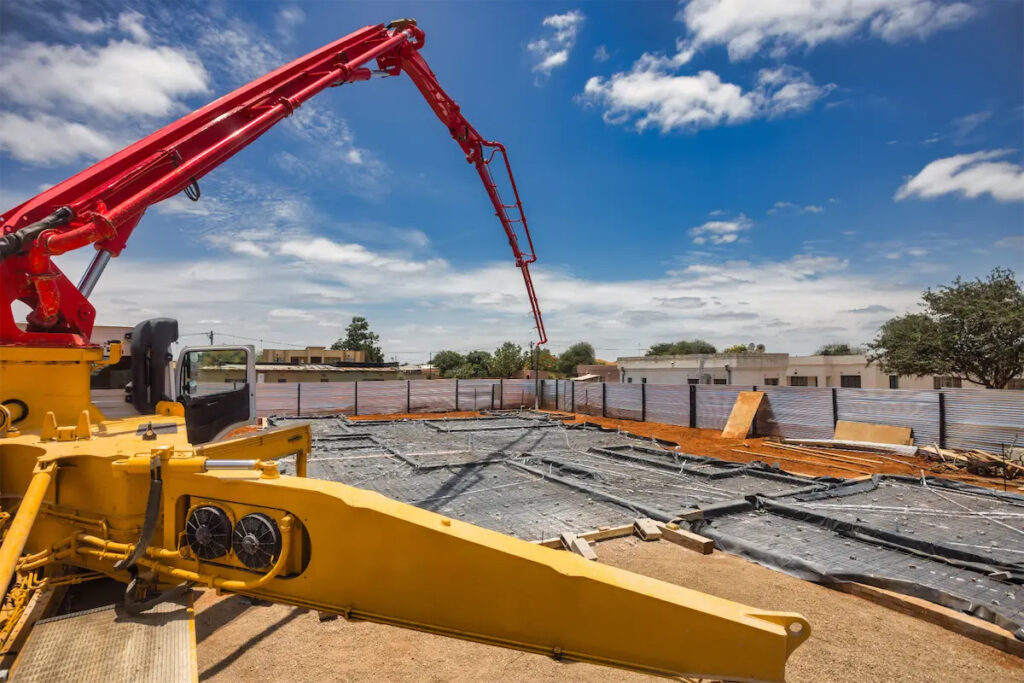
- Boom pumps provide the delivery of concrete directly by a hydraulic arm
Installation takes 30-60 minutes depending on the complexity.
Step 3: Concrete Delivery
Concrete is trucked in and poured into the pump hopper.
From there:
- The mix is transported by pipes or hoses by the pump
- Flow and direction is controlled by operators
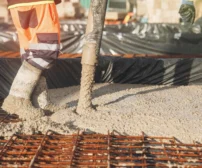
- The concrete is laid where the need be
Step 4: Placement and Finishing
Once pumped:
- The concrete is laid out and distributed by the workers
- Immediately screening and finishing commences
- Time must be taken to cure appropriately
Step 5: Clean-Up
After the pour:
- Pumps and hoses are cleaned
- Washout is managed safely
Site is abandoned, in accordance with local regulations
Types of Concrete Pumps
To be efficient and control costs, it is necessary to select the appropriate equipment.
Line Pumps
Line pumps operate with hoses that are flexible so as to deliver the concrete over a horizontal distance.
Best For:
- Residential slabs
- Driveways
- Small to medium pours
- Tight access sites
Advantages:
- More affordable
- Flexible hose placement
- Suited to close or confined space
Boom Pumps
In boom pumps a robotic arm is used to pour concrete off.
Best For:
- Multi-storey builds
- Large slabs
- Commercial projects
- Hard-to-reach areas
Advantages:
- Faster placement
- Long reach (height and distance)
- Reduced manual handling
Choosing the Right Option
The decision usually hinges on in Canberra:
- Block access
- Pour size
- Height requirements
- Budget considerations
Ineffective matching may cause delays or increase in costs and therefore planning is important.
Canberra Localities
Pumping concrete in Canberra is not just all about equipment–it is all about getting used to the local environment.
Access Challenges
There are a lot of suburbs with their own challenges:
- Streets with small parking space
- Shared driveways
- Steep or uneven blocks
These have effects on which pump to use and how to install it.
Weather Conditions
The climate at Canberra may influence concrete work:
- Cold winters slow curing
- Hot summers may lead to rapid drying
- Sudden rain impacts timing
The correct scheduling will prevent complications.
Site Preparation
Prior to the pumping, locations must be:
- Cleared of obstacles
- Reinforced and well-formed
- Accessible for equipment
Where there is good preparation, one is guaranteed of a smooth pour.
Local Building Environment
Canberra can be built in ways that often include:
- Extremely high compliance requirements
- The trading of the coordinated trades
- Project stages that are time sensitive
With effective pumping, it can keep everything on track.
Costs and Timelines
It is good to know what influences cost and time to avoid such surprises.
Pricing Influencing Factors
Prices of concrete pumping may depend on:
- Pump type (line vs boom)
- Job size and duration
- Distance and accessibility
- Complexity of setup
Jobs that are larger or more complex can normally take time and equipment.
Typical Job Timelines
The entire residential pours have the following general schedule:
- Setup: 30-60 minutes
- Pumping: 1-3 hours (based on size)
- Clean-up: 30-60 minutes
Depending on the size, commercial projects can become slower.
Common Mistakes and Misconceptions
These problems can be prevented, which will save time and money.
Manual pouring is assumed to be cheaper
Manual methods: Although it might appear to be cost-effective, manual methods:
- Take longer
- Require more labour
- Raise the chances of disproportional positioning
Underestimating Access Issues
Most projects are delayed due to:
- Machinery is not able to access the location
- Installation is more time-consuming than anticipated
This is inhibited by proper assessment.
Choosing the Wrong Pump
Mistakes in equipment use may cause:
- Slower pours
- Higher costs
- Reduced efficiency
Poor Site Preparation
Unprepared sites can cause:
- Delays
- Safety risks
- Uneven results
What to Consider in Canberra-Specific Solutions
Not pumping services are universal. The selection of the provider is important.
Local Experience
Look for teams familiar with:
- Canberra suburbs
- Block layouts
- Construction practices in the area
Suitable Equipment
A good provider offers:
- Both line and boom pumps
- Well-maintained machinery
- Project appropriate equipment
Concentrate on Safety and Effectiveness
Dependable services give priority to:
- Safe setup and operation
- Efficient concrete flow
- Compliant work practices that are clean
Clear Communication
Good coordination ensures:
- Smooth scheduling
- Proper preparation
- Fewer on-site issues
To obtain a more general picture of the effect of equipment choice and location planning, this comprehensive guide to the concrete pumping services at Canberra describes how the correct strategy may lift the efficiency and lessen the construction delays.
Key Takeaways
Concrete pumping is an essential part of Canberra construction that facilitates the provision of concrete to a large number of residential and commercial constructions effectively.
Key points to remember:
- Pumping suits narrow locations and intricate sites
- Line pumps are more suitable in smaller domestic projects
- Large or high pours are most suitable with boom pumps
- Weather and block layout are local conditions that are important
- The correct planning and selection of equipment minimizes the delays and expenses
The knowledge of the working process enables builders and homeowners to make the right choice and produce higher results.